
Alter Egos and Double Lives: The Hidden Cost of Sex Work in Dubai
Every morning, she wakes up before the sun. She brushes her teeth with the same toothpaste she used in college. She puts on the same perfume she wore on her first date. Then she steps into a different skin. This isn’t a roleplay. It’s survival. In Dubai, where luxury towers pierce the sky and private jets idle on tarmac, thousands live double lives-switching between the person they are and the person they’re paid to be. Some call it sex work. Others call it a job. Few talk about what happens when the mask won’t come off.
For many, the line between personal and professional blurs faster than expected. A woman who spends her nights as a high-end companion might spend her days tutoring kids or managing a boutique. One client described her as ‘the perfect blend of warmth and detachment’-a phrase that stuck with her because it was the first time someone saw her as both real and replaceable. She doesn’t mention her real name online. But if you search ‘friends with benefits dubai’, you’ll find dozens of profiles like hers: curated, polished, priced. They’re not just selling time. They’re selling the illusion of intimacy without consequences.
The Performance of Pleasure
Sex work in Dubai isn’t like what you see in movies. There’s no neon-lit alleyways or shady backrooms. It’s mostly private apartments, luxury hotel suites booked under fake names, and encrypted apps that disappear after each session. The clients? Doctors, expat executives, tourists with more money than sense. The workers? Often educated, often from countries with fewer opportunities. One woman, who asked to remain anonymous, studied engineering in India before moving to Dubai on a student visa. When her scholarship ran out, she took a job as a ‘hostess’ at a lounge. Three months later, she was charging $800 an hour for companionship that included sex, conversation, and emotional labor.
The work demands emotional precision. You can’t show fatigue. You can’t say no to a request unless you’re ready to lose income. You learn to smile when your stomach is in knots. You memorize favorite drinks, pet names, and past traumas-only to delete the memories the next morning. This isn’t about desire. It’s about control. The control to choose when to say yes, when to say no, and when to disappear.
The Double Life
At home, she’s a daughter. A sister. A friend who texts back at midnight. She tells her family she works in marketing. Her best friend thinks she’s traveling for conferences. She posts photos of beaches and coffee shops on Instagram, always with the same filter. The captions are cheerful, vague. ‘Another beautiful day in the city!’
But the cost is measured in silence. She doesn’t talk about the man who cried after sex because he missed his wife. She doesn’t tell her mother about the client who asked her to wear his dead daughter’s dress. She doesn’t mention the nights she slept in her car because the apartment was too expensive and the Uber driver recognized her from last week’s booking.
This duality isn’t unique to Dubai. But here, the pressure to perform perfection is amplified. The city thrives on image. Everything is staged-the skyline, the shopping malls, the people. So when someone pays for a companion, they’re not just paying for sex. They’re paying for a version of reality that doesn’t exist outside the room.
When the Mask Cracks
Burnout doesn’t come with a warning sign. It doesn’t show up as exhaustion. It shows up as numbness. One worker, who went by the name ‘Luna’ on the apps, stopped answering messages for three weeks. When she returned, she said she’d been in the hospital. Not for injury. For a panic attack triggered by a client who called her by her real name-something he’d found on a public Instagram post she thought was private.
She wasn’t the first. Others have quit after being doxxed. After being blackmailed. After their employers threatened to report them to immigration. One woman told a journalist, ‘I don’t mind the work. I mind that no one sees me as human when I’m not being paid.’
Some turn to therapy. Others find support groups online. A few start blogs under pseudonyms. But most just keep going. Because quitting means losing income. And losing income means losing housing. And losing housing means losing everything.
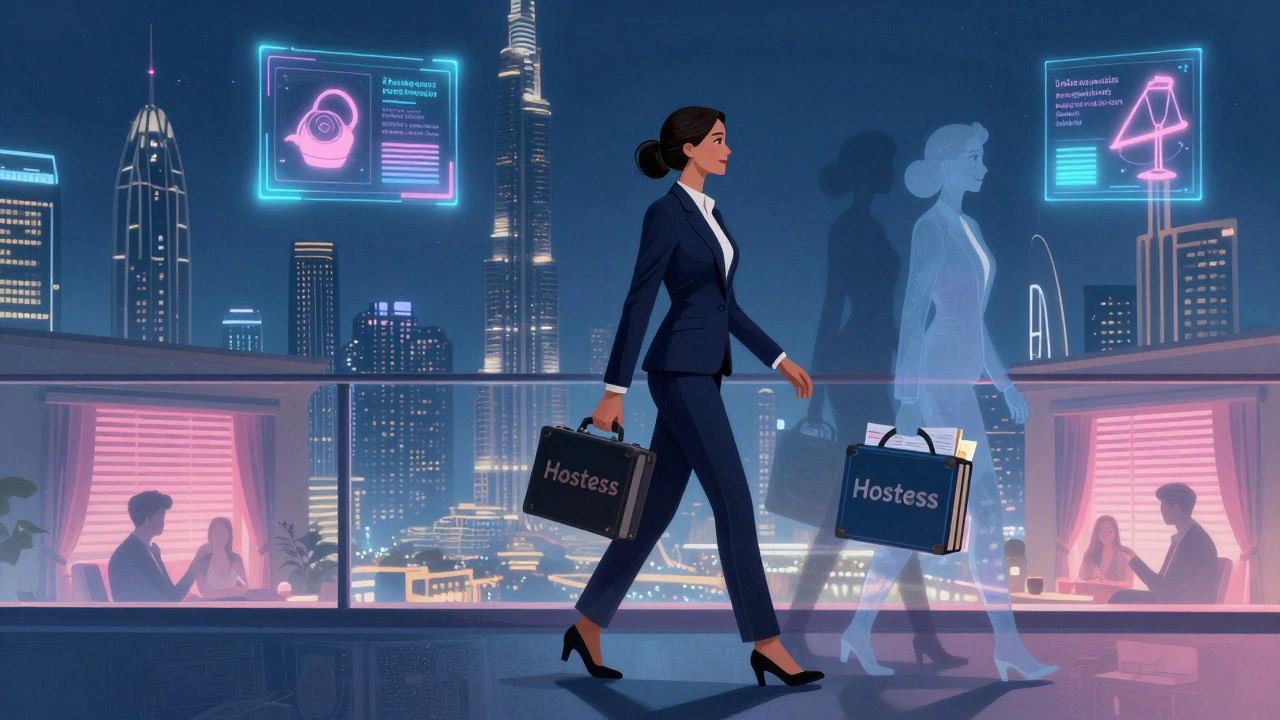
The False Freedom
Many say they chose this life. And in a way, they did. But choice doesn’t mean freedom. It means survival with a side of dignity. They’re not trapped by pimps or traffickers. They’re trapped by systems-immigration laws, housing costs, wage gaps, and the belief that this is the only way out.
Some try to transition out. One woman started an online store selling handmade jewelry. Another began teaching English via Zoom. But the stigma follows them. Banks freeze accounts. Landlords refuse leases. Friends drift away when they find out. ‘People think if you’ve done this, you’re broken,’ she said. ‘But I’m not broken. I’m just tired.’
There’s a growing movement among workers in the region to organize. To demand rights. To push for decriminalization. But progress is slow. And dangerous. In Dubai, the law doesn’t protect sex workers-it punishes them. Even if they’re not breaking the law, they’re still treated like criminals.
The Quiet Ones
There’s a group on Telegram with 2,000 members. No names. No faces. Just stories. One post reads: ‘Today I made $1,200. I sent $800 to my sister’s medical bill. I kept $400 for my rent. I cried in the shower. I didn’t tell anyone.’
Another: ‘I used to love the way my skin felt after a shower. Now I scrub until it bleeds.’
And another: ‘I miss being able to say ‘I’m tired’ without someone assuming I’m available for a discount.’
These aren’t just stories. They’re statistics with breath. They’re people who used to love music, who used to dance in their kitchens, who used to believe in love. Now they just want to sleep without dreaming.

The Price of Performance
There’s a term in the industry: ‘tryst dubai.’ It’s not a place. It’s a vibe. A promise. A fantasy sold in packages. It’s what clients search for when they want something clean, discreet, and emotionally safe. But the workers know the truth: there’s no safety here. Only transaction.
Some try to reclaim their identity. They start podcasts. They write poetry. They post anonymously on Reddit. But the system doesn’t make space for that. It wants them to stay quiet. To stay profitable. To stay invisible.
One worker, who’d been in the game for seven years, finally left. She moved to Portugal. She opened a small café. She doesn’t tell anyone her past. But sometimes, when the sun hits the espresso machine just right, she smiles. Not the one she used for clients. The real one. The one she forgot she had.
There’s a phrase that circulates among workers: ‘You don’t become what you do. You become what you survive.’
And somewhere in Dubai, another woman is getting ready for another night. She checks her phone. A new message. ‘You’re the only one who makes me feel seen.’ She types back: ‘I’m here.’
She doesn’t say: ‘I’m tired.’
She doesn’t say: ‘I miss my mom.’
She doesn’t say: ‘I wish I could just be me.’
Instead, she puts on her lipstick. And walks out the door.
What Happens When You Can’t Turn It Off?
The hardest part isn’t the work. It’s the silence afterward. When the client leaves. When the lights go off. When you’re alone in a room that smells like perfume and regret.
You start to wonder: Is this who I am? Or is this just what I do?
Some find answers in art. Others in religion. A few in drugs. Most just keep going. Because stopping means admitting you lost. And no one wants to admit that.
There’s a woman in Al Barsha who calls herself ‘Tramp Dubai’ on her profile. She doesn’t use her real name. She doesn’t show her face. She says she does this because ‘it pays better than being a nurse.’ She doesn’t mention that her mother died last year. Or that she hasn’t had a real conversation in eight months. She just says, ‘I’m good at this.’
And maybe she is.
But no one asks if she wants to be.